

Only guests see ads. Create a free account and/or log in for a complete ad-free experience.


SirMadsen
Administrators
-
Joined
-
Last visited
Everything posted by SirMadsen
-
 Die Hard: Nakatomi Plaza The game is based on the first film of the Die Hard series, in which cunning Alan Rickman takes over the state-of-the-art Nakatomi Plaza building as part of a deeply devious robbery, and only Bruce Willis, there to meet his separated executive wife, can stop the faux terrorists. It's a great action flick noted for a stonking villain, displays of ingenuity on both sides, pulse-pounding set pieces and an all-too human hero who gets hurt and tired and frustrated rather than simply displaying the traditional action-hero square chin and invulnerability. Sadly, all these points are missing from the game. File Information Submitter [[Template core/front/global/userLink is throwing an error. This theme may be out of date. Run the support tool in the AdminCP to restore the default theme.]] Submitted 01/15/2022 Category Action View File
 -
 The Die Hard series of films are somewhat obvious candidates for being the basis of a computer game. The combination of violence and terrorists with strange European accidents provides excellent material for an action game. Die Hard Trilogy is a set of three games based on the three films. Bundling three games together in one package initially sounds like a bad idea. Surely you'll end up with three weak games rather than one strong one? However, Die Hard Triology works remarkably well. Die Hard Trilogy gives you three very different games for your money. All of them are quite compelling but aren't really of a high enough quality to maintain your interest for too long. However, because there are three games, you can move between them to keep your interest level up. The package works surprisingly well. However, none of the games would really stand up all that well on their own, so you really have to decide what it is you are looking for. If you want one excellent version of one of these styles of games then you would be advised to look elsewhere. However, if you want a wide range of action then this package may suit you. I certainly enjoyed it and it is one of the better movie licenses of recent times.Free
 -
Die Hard Trilogy The Die Hard series of films are somewhat obvious candidates for being the basis of a computer game. The combination of violence and terrorists with strange European accidents provides excellent material for an action game. Die Hard Trilogy is a set of three games based on the three films. Bundling three games together in one package initially sounds like a bad idea. Surely you'll end up with three weak games rather than one strong one? However, Die Hard Triology works remarkably well. Die Hard Trilogy gives you three very different games for your money. All of them are quite compelling but aren't really of a high enough quality to maintain your interest for too long. However, because there are three games, you can move between them to keep your interest level up. The package works surprisingly well. However, none of the games would really stand up all that well on their own, so you really have to decide what it is you are looking for. If you want one excellent version of one of these styles of games then you would be advised to look elsewhere. However, if you want a wide range of action then this package may suit you. I certainly enjoyed it and it is one of the better movie licenses of recent times. File Information Submitter [[Template core/front/global/userLink is throwing an error. This theme may be out of date. Run the support tool in the AdminCP to restore the default theme.]] Submitted 01/15/2022 Category Action View File
-
 An okay game based on the 1994 Winter Olympics tournament at Lillehammer, Winter Olympics by US Gold includes a decent variety of events, but not nearly as good as Accolade's better-known-although-without-official-license Winter Challenge. The graphics are adequate, but gameplay options are lacking: you can't practice in any event before the tournament since the game offers only 2 options: "Full Olympics" and "Mini Olympics." The events are fairly standard (e.g. skiing, shooting), but they are much more difficult than Accolade's game due to awkward and unresponsive control schemes. Some events are notably better than others -- perhaps a result of them being coded by different programmers. Overall, Winter Olympics is a decent game that is worth a look for Olympics fans, but won't hold anyone's interest for long.Free
 -
Winter Olympics: Lillehammer '94 An okay game based on the 1994 Winter Olympics tournament at Lillehammer, Winter Olympics by US Gold includes a decent variety of events, but not nearly as good as Accolade's better-known-although-without-official-license Winter Challenge. The graphics are adequate, but gameplay options are lacking: you can't practice in any event before the tournament since the game offers only 2 options: "Full Olympics" and "Mini Olympics." The events are fairly standard (e.g. skiing, shooting), but they are much more difficult than Accolade's game due to awkward and unresponsive control schemes. Some events are notably better than others -- perhaps a result of them being coded by different programmers. Overall, Winter Olympics is a decent game that is worth a look for Olympics fans, but won't hold anyone's interest for long. File Information Submitter [[Template core/front/global/userLink is throwing an error. This theme may be out of date. Run the support tool in the AdminCP to restore the default theme.]] Submitted 01/15/2022 Category Sports View File
-
Die Hard Trilogy 2: Viva Las Vegas Die Hard Trilogy 2 Fox Interactive and developers N Space have attempted to bring back the flair of the original game with all the same style games, but with new scenarios. The story goes that one-day John McClane, lying in bed (probably in a vest), is called to a mass prison breakout. You must put a halt to these shenanigans. It seems strange that McClane, the blue-collar cop, the master of being in the wrong place at the wrong time, should be the all-out action hero who goes looking for adventure. Of course, the breakout is the beginning of something much bigger. Break it down! The game allows you to play through either a story mode, arcade mode, or practice to your hearts content. We'll go through the games as they appear in the story mode. First up, the third-person antics. Third-person antics You've got your gun, you've got a location, what do you do next? You have to travel to a designated area while shooting those who would oppose you. So, off you go and, as in most third-person games, the direct route is never available. Hunting around for levers to pull is the tuxedo-wearing McClane - you heard me, tuxedo. The iconic vision of a man in a string vest has gone and now we have some Bond-a-like. This section is the weakest element of the game. It's too simple: go around, shoot people and press buttons until you get to where you need to go. Also, McClane floats along the ground and precision control is required to get close enough to press in-game buttons. The animation is flawed as well; stepping over body causes you to rise about six feet in the air. Shooting things in the head antics One of the better aspects of the PC conversion comes to light with the shooting game. Targets run on screen, you blow their brains out while keeping an eye out for extra weapons such as shotguns, rocket launchers and machine guns. The game's readiness to allow several controllers to be used is a plus; you can plug in a joypad and use it in the previous two games and then use the mouse for this level. This game is probably the most boring as it is simply like playing "click-on-the-baddie" and there is no challenge. The light-gun had appeal on the PlayStation, for which there are many and varied light-gun shooters; but on the PC why would you fork out for a peripheral you might only use one or twice in your gaming life? We couldn't get our makeshift, washing-up bottle and piece of wire light-gun to work so we can't really comment on how well DHT2 worked with it, although the instruction manual does say that the game supports the Act Labs series of guns. The graphics are presented well, although overuse of textures chops off a lot of speed, especially at higher resolutions. Sometimes, mainly during the explosions, the frame-rate nose-dives so much that a slow-motion effect takes over until the explosion has dispersed. Animation in this section is a lot better. Racing around antics The racing section was the best feature of the original game, with its New York-based structures and classic arcade feel. Unfortunately, the game is a little weaker in this sequel. The original game had a Crazy Taxi feel to it, but this version plays like the terrible Interstate '82. The sprawling levels are too easy to get lost in, and when I played, I couldn't get the head-up display to work properly, so there was no map locator. This section is fairly simple with no great challenges at the start and things don't really get much harder when you drive around the city of Las Vegas in later levels. The handling is sloppy and it is far too easy. The best feature of the game overall is the music, although I still wouldn't buy it. Fast action tunes from acts such as BT, Lil' Zane, Tony Touch and Black Rob are pretty cool stuff for a game. This is the only side of the whole package that is any good. This is a bit of a turn around as far as games go. End credits What the game lacks is any real challenge or stability. I couldn't get movies, the sound occasionally disappeared, and the game crashed on several occasions - on various computers. I can't understand why Fox would release a game that is so bad and so unstable. Of course, it goes back to the blinkered equation that PC + hit Console game = hit PC game. Fox Interactive and N space must do better! File Information Submitter [[Template core/front/global/userLink is throwing an error. This theme may be out of date. Run the support tool in the AdminCP to restore the default theme.]] Submitted 01/15/2022 Category Action View File
-
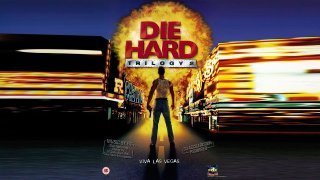 Die Hard Trilogy 2 Fox Interactive and developers N Space have attempted to bring back the flair of the original game with all the same style games, but with new scenarios. The story goes that one-day John McClane, lying in bed (probably in a vest), is called to a mass prison breakout. You must put a halt to these shenanigans. It seems strange that McClane, the blue-collar cop, the master of being in the wrong place at the wrong time, should be the all-out action hero who goes looking for adventure. Of course, the breakout is the beginning of something much bigger. Break it down! The game allows you to play through either a story mode, arcade mode, or practice to your hearts content. We'll go through the games as they appear in the story mode. First up, the third-person antics. Third-person antics You've got your gun, you've got a location, what do you do next? You have to travel to a designated area while shooting those who would oppose you. So, off you go and, as in most third-person games, the direct route is never available. Hunting around for levers to pull is the tuxedo-wearing McClane - you heard me, tuxedo. The iconic vision of a man in a string vest has gone and now we have some Bond-a-like. This section is the weakest element of the game. It's too simple: go around, shoot people and press buttons until you get to where you need to go. Also, McClane floats along the ground and precision control is required to get close enough to press in-game buttons. The animation is flawed as well; stepping over body causes you to rise about six feet in the air. Shooting things in the head antics One of the better aspects of the PC conversion comes to light with the shooting game. Targets run on screen, you blow their brains out while keeping an eye out for extra weapons such as shotguns, rocket launchers and machine guns. The game's readiness to allow several controllers to be used is a plus; you can plug in a joypad and use it in the previous two games and then use the mouse for this level. This game is probably the most boring as it is simply like playing "click-on-the-baddie" and there is no challenge. The light-gun had appeal on the PlayStation, for which there are many and varied light-gun shooters; but on the PC why would you fork out for a peripheral you might only use one or twice in your gaming life? We couldn't get our makeshift, washing-up bottle and piece of wire light-gun to work so we can't really comment on how well DHT2 worked with it, although the instruction manual does say that the game supports the Act Labs series of guns. The graphics are presented well, although overuse of textures chops off a lot of speed, especially at higher resolutions. Sometimes, mainly during the explosions, the frame-rate nose-dives so much that a slow-motion effect takes over until the explosion has dispersed. Animation in this section is a lot better. Racing around antics The racing section was the best feature of the original game, with its New York-based structures and classic arcade feel. Unfortunately, the game is a little weaker in this sequel. The original game had a Crazy Taxi feel to it, but this version plays like the terrible Interstate '82. The sprawling levels are too easy to get lost in, and when I played, I couldn't get the head-up display to work properly, so there was no map locator. This section is fairly simple with no great challenges at the start and things don't really get much harder when you drive around the city of Las Vegas in later levels. The handling is sloppy and it is far too easy. The best feature of the game overall is the music, although I still wouldn't buy it. Fast action tunes from acts such as BT, Lil' Zane, Tony Touch and Black Rob are pretty cool stuff for a game. This is the only side of the whole package that is any good. This is a bit of a turn around as far as games go. End credits What the game lacks is any real challenge or stability. I couldn't get movies, the sound occasionally disappeared, and the game crashed on several occasions - on various computers. I can't understand why Fox would release a game that is so bad and so unstable. Of course, it goes back to the blinkered equation that PC + hit Console game = hit PC game. Fox Interactive and N space must do better!Free
 -
Excalibur (16x) View File Excalibur is a resource pack created to enhance the adventure that Minecraft presents. Excalibur brings your kingdoms and villages to life while keeping the charm of the default resolution textures. Submitter SirMadsen Submitted 01/15/2022 Category Texture Packs
-
Jicklus (16x) View File The pack aims to capture the classic Minecraft feel, combined with a rustic style. Use Sildur's Shaders to accompany this pack to really bring it to life. Submitter SirMadsen Submitted 01/15/2022 Category Texture Packs
-
Sapixcraft (512x) View File Sapixcraft is an easy to play resource pack which significantly improves your Minecraft experience by making your world as clean as possible in a cartoon and unique style. Sapixcraft is available in 5 different resolutions for Java Edition and Bedrock! Use Optifine for best results. Submitter SirMadsen Submitted 01/15/2022 Category Texture Packs
-
Conquest_ (32x) View File Conquest is a medieval-inspired resource pack taking a lot of influences from other packs like "John Smith" and games like "Stronghold". Many creative and exceptional builders and players have gathered and made the community flourish in the light that it is today. Become a part of our community and show us what you have created with Conquest_. Use Optifine for the full effect and Metadata Submitter SirMadsen Submitted 01/15/2022 Category Texture Packs
-
Majestica (32x) View File Majestica is a fantasy medieval based texture pack that mixes realistic and cartoon-ish textures for unique style. To fully experience the texture packs features OPTIFINE IS NEEDED! as well as you need to play on fancy graphics otherwise leaves will have green background on them Submitter SirMadsen Submitted 01/15/2022 Category Texture Packs
-
Depixel, a Detailed Vanilla Experience (32x) View File Discover the classic, well known Minecraft in double as much details. Previously known as Default 32x32, Depixel brings you a smooth, consistent experience with a touch of realism, keeping the Vanilla style in all its glory. If you’re a fan of Vanilla look, there is nothing that you won’t recognize, even if you’ve never used Depixel. Submitter SirMadsen Submitted 01/15/2022 Category Texture Packs
-
Misa's Realistic Texture Pack (64x) View File Features Emphasis on Realism Without Going Too Photographic - Materials are designed to make sense and resemble the components they're crafted from. Art style is semi-realistic and inspired by old-school RPG's and raycast (boomer) shooters with a medieval-lite setting. Reduced Eyestrain - Colors are a bit darker and more desaturated (or muted) than vanilla to allow for longer playtime without being too harsh on the eyes. Mostly Faithful to Vanilla Intent - No strong theme that alters textures so drastically that you're guessing what's what. Builds made in this pack will work well with those playing with vanilla textures but allow for more creative detail with the pack. (See the next feature.) Advanced Texture Features for Improved Variety - Supports connected textures, random mobs, custom models, and much more. This greatly improves creative options with block placement while making exploration more interesting and diverse. Easter Eggs - With the increased diversity of blocks and mobs, expect to discover rare little references and surprises on occasion. Information/Disclaimer This texture pack relies on multiple advanced features introduced by MCPatcher. As MCPatcher is no longer in development, Optifine is now required to properly use this resource pack. You will need to ensure you have the latest version installed for the version of the game you are on. As a result of the switch from MCPatcher to Optifine, some old features have unfortunately been removed or altered to function within the limitations of Optifine. Submitter SirMadsen Submitted 01/15/2022 Category Texture Packs
-
Coterie Craft Frontier [16x/32x] View File COTERIE CRAFT is not your traditional faithful pack, it's not default... Instead, it has evolved into something eye-pleasing and iconic. Call it whatever you want: lush, soft, simple, smooth, HD, cartoony... it's whatever it needs to be to make Minecraft look like the game it ought to be. "DEFAULT REVAMPED" is just what I call it... Coterie Craft intends to improve the appearance and fervor of Minecraft by giving it the textures it deserves, and that goal has been preserved thanks to the efforts of those who continue to use this pack. This pack holds its original inspiration from ExtraNoise's QUANDARY PACK, which featured work from Bonemouse as well as, Cpt. Corn. Submitter SirMadsen Submitted 01/15/2022 Category Texture Packs
-
Dungeons Texture Pack (32x) View File Everyone knows that MINECRAFT: Dungeons is better than the base game no matter what. So, the Creator of this texture pack wanted to make the most popular video game want to look a little more like this via a resource pack. Enter the MINECRAFT: Dungeons Texture Pack Pack! This update focuses on an attempt to place every Dungeons textures onto MINECRAFT. Submitter SirMadsen Submitted 01/15/2022 Category Texture Packs
-
Faithful PBR (128x) View File Submitter SirMadsen Submitted 01/15/2022 Category Texture Packs
-
Faithful PBR (256x) View File Submitter SirMadsen Submitted 01/15/2022 Category Texture Packs
-
Faithful PBR (512x) View File Submitter SirMadsen Submitted 01/15/2022 Category Texture Packs
-
Eragon The majority of the game is taken up by third-person combat, usually on foot. At the start of the game the player can use four "combo" attacks. Additionally, they can use three basic magic attacks: magic push/pull (Thrysta Vindr), magic shield (Skölir), and magic fire (Brisingr). These three magic attacks can be utilised in different ways (for example, Brisingr arrows, or throwing spears in baskets magically). On the PC and console versions (excluding the Xbox 360 version) there are sixteen levels. Some missions permit the player to use the dragon Saphira in combat. The gameplay mechanics within these levels are largely similar to those in ground-based levels, with the exception of some different attack moves (such as tail attacks). Protagonist Eragon sits on Saphira's back during these sections, and can be made to fire magic arrows. The player has no choice as to whether or not they use Saphira. Similarly, the player cannot use Saphira in ground-based levels: they can call for her and she will swoop past, but it is not possible to use this feature to ride Saphira. There is a multiplayer co-op mode which allows two people to play through the main storyline. It is possible to switch from playing a one-player game to a two-player game at any time. There are no Internet multiplayer options. File Information Submitter [[Template core/front/global/userLink is throwing an error. This theme may be out of date. Run the support tool in the AdminCP to restore the default theme.]] Submitted 01/15/2022 Category Action View File
-
 The majority of the game is taken up by third-person combat, usually on foot. At the start of the game the player can use four "combo" attacks. Additionally, they can use three basic magic attacks: magic push/pull (Thrysta Vindr), magic shield (Skölir), and magic fire (Brisingr). These three magic attacks can be utilised in different ways (for example, Brisingr arrows, or throwing spears in baskets magically). On the PC and console versions (excluding the Xbox 360 version) there are sixteen levels. Some missions permit the player to use the dragon Saphira in combat. The gameplay mechanics within these levels are largely similar to those in ground-based levels, with the exception of some different attack moves (such as tail attacks). Protagonist Eragon sits on Saphira's back during these sections, and can be made to fire magic arrows. The player has no choice as to whether or not they use Saphira. Similarly, the player cannot use Saphira in ground-based levels: they can call for her and she will swoop past, but it is not possible to use this feature to ride Saphira. There is a multiplayer co-op mode which allows two people to play through the main storyline. It is possible to switch from playing a one-player game to a two-player game at any time. There are no Internet multiplayer options.Free
 -
The Movies The Movies is three games in one, or more accurately, two games and an editing program. It's a tycoon-style strategy game that puts you in charge of a movie studio, and a Sims-style people simulator that forces you to satisfy the needs and egos of your stars to keep them sober and producing quality films. The moviemaker is pretty much its own thing, only required to make the highest-rated movies but it has little effect on either of the other two parts of the game. The Movies is purely a sandbox game. There's little structure, or any missions or scenarios. You can set some starting parameters, year, amount of cash, whether you want a pre-built studio or not so you can just focus on making movies but you're always trying to maintain your studio and make money. Unsurprisingly, you make money producing movies. Though the structure of constructing a script, rehearsing, assigning directors and actors, and sending them off to shoot the film is similar to a little-known gem called Hollywood Mogul, Lionhead deserves a lot of credit for developing a unique interface. You spend a lot of time dragging people (with a funny thwack sound) to and from locations to drop them on objects to perform actions. Once writers create a script, you drag it to production. It's harder to describe than it is to actually utilize; this is one simple, polished, sophisticated, and terrific interface. File Information Submitter [[Template core/front/global/userLink is throwing an error. This theme may be out of date. Run the support tool in the AdminCP to restore the default theme.]] Submitted 01/15/2022 Category Simulation View File
-
 The Movies is three games in one, or more accurately, two games and an editing program. It's a tycoon-style strategy game that puts you in charge of a movie studio, and a Sims-style people simulator that forces you to satisfy the needs and egos of your stars to keep them sober and producing quality films. The moviemaker is pretty much its own thing, only required to make the highest-rated movies but it has little effect on either of the other two parts of the game. The Movies is purely a sandbox game. There's little structure, or any missions or scenarios. You can set some starting parameters, year, amount of cash, whether you want a pre-built studio or not so you can just focus on making movies but you're always trying to maintain your studio and make money. Unsurprisingly, you make money producing movies. Though the structure of constructing a script, rehearsing, assigning directors and actors, and sending them off to shoot the film is similar to a little-known gem called Hollywood Mogul, Lionhead deserves a lot of credit for developing a unique interface. You spend a lot of time dragging people (with a funny thwack sound) to and from locations to drop them on objects to perform actions. Once writers create a script, you drag it to production. It's harder to describe than it is to actually utilize; this is one simple, polished, sophisticated, and terrific interface.Free
 -
Zeus: Master of Olympus Set in the mythical Heroic Age, Zeus doesn’t pretend to be an accurate historical simulation, a fact bemoaned by some of the series’ fans. The twelve chief deities of the Olympian pantheon will all periodically walk (or attack) the streets of your cities, and legendary monsters like the Minotaur and the Lernean Hydra will make snack food out of your hapless citizens. Great “heroes” such as Theseus and Hercules will come to your rescue if you meet their mercenary demands for cash, goods, and services. These mythological complications add serious tension to the scenarios where they occur. When an angry Poseidon destroys the water-born trade and fishing that a coastal city relies upon for survival, a real sense of urgency results. Still, the heart of Zeus lies in city design. Veterans of the previous games will immediately notice that Zeus features a somewhat simpler (and therefore faster-paced) approach to urban planning. Industrial, agricultural, military, and cultural buildings no longer send out “walkers” that need to find residential housing within a certain radius in order for the buildings to function. Instead, if there is available labor anywhere in the city, employees come to work. This makes the game easier than Caesar or Pharaoh, both of which forced you to place polluting industries close enough to housing to find workers. The fashion in which campaigns are structured is also greatly improved. Instead of forcing you to hack a brand-new city out of a howling wilderness in each scenario, most cities in Zeus carry forward into the next episode. For example, in the “Athens through the Ages” campaign, you’ll establish new cities (Athens and two colonies) in three of the eight scenarios. The remaining five episodes of the campaign build upon Athens’ early foundations, and in the process your creation will evolve from a minor village into the greatest city in Greece. And what a Greece it is! Past Impressions titles have done a poor job simulating the world surrounding your cities, at most allowing you to trade with a few neighbors and fulfill their requests for goods or troops. In Zeus, an entirely new political and economic model enables much more interesting interactions with the other city-states. Allied cities will still trade with you and make occasional requests, but you can finally badger them for goods too. Colonies and vassals pay annual resource tributes to your capital. Rival cities will sometimes attack you, but you can do the same. Better still, every action you take has diplomatic consequences. Conquering a rival, winning the Olympic Games, or fulfilling an ally’s request will improve your standing with other cities. Zeus is significantly different from previous titles and a worthy addition to the series. Its faster pace, simpler city design, and mythological elements open the game to more casual players. File Information Submitter [[Template core/front/global/userLink is throwing an error. This theme may be out of date. Run the support tool in the AdminCP to restore the default theme.]] Submitted 01/15/2022 Category Strategy View File
-
 Set in the mythical Heroic Age, Zeus doesn’t pretend to be an accurate historical simulation, a fact bemoaned by some of the series’ fans. The twelve chief deities of the Olympian pantheon will all periodically walk (or attack) the streets of your cities, and legendary monsters like the Minotaur and the Lernean Hydra will make snack food out of your hapless citizens. Great “heroes” such as Theseus and Hercules will come to your rescue if you meet their mercenary demands for cash, goods, and services. These mythological complications add serious tension to the scenarios where they occur. When an angry Poseidon destroys the water-born trade and fishing that a coastal city relies upon for survival, a real sense of urgency results. Still, the heart of Zeus lies in city design. Veterans of the previous games will immediately notice that Zeus features a somewhat simpler (and therefore faster-paced) approach to urban planning. Industrial, agricultural, military, and cultural buildings no longer send out “walkers” that need to find residential housing within a certain radius in order for the buildings to function. Instead, if there is available labor anywhere in the city, employees come to work. This makes the game easier than Caesar or Pharaoh, both of which forced you to place polluting industries close enough to housing to find workers. The fashion in which campaigns are structured is also greatly improved. Instead of forcing you to hack a brand-new city out of a howling wilderness in each scenario, most cities in Zeus carry forward into the next episode. For example, in the “Athens through the Ages” campaign, you’ll establish new cities (Athens and two colonies) in three of the eight scenarios. The remaining five episodes of the campaign build upon Athens’ early foundations, and in the process your creation will evolve from a minor village into the greatest city in Greece. And what a Greece it is! Past Impressions titles have done a poor job simulating the world surrounding your cities, at most allowing you to trade with a few neighbors and fulfill their requests for goods or troops. In Zeus, an entirely new political and economic model enables much more interesting interactions with the other city-states. Allied cities will still trade with you and make occasional requests, but you can finally badger them for goods too. Colonies and vassals pay annual resource tributes to your capital. Rival cities will sometimes attack you, but you can do the same. Better still, every action you take has diplomatic consequences. Conquering a rival, winning the Olympic Games, or fulfilling an ally’s request will improve your standing with other cities. Zeus is significantly different from previous titles and a worthy addition to the series. Its faster pace, simpler city design, and mythological elements open the game to more casual players.Free
Only guests see ads. Create a free account and/or log in for a complete ad-free experience.