Jump to content
Only guests see ads. Create a free account and/or log in for a complete ad-free experience.

SirMadsen

Administrators
  • Joined

  • Last visited

Everything posted by SirMadsen

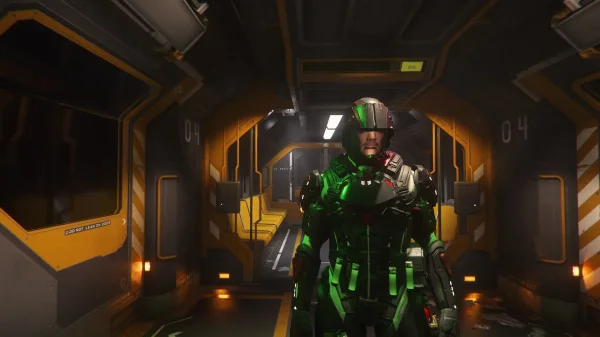
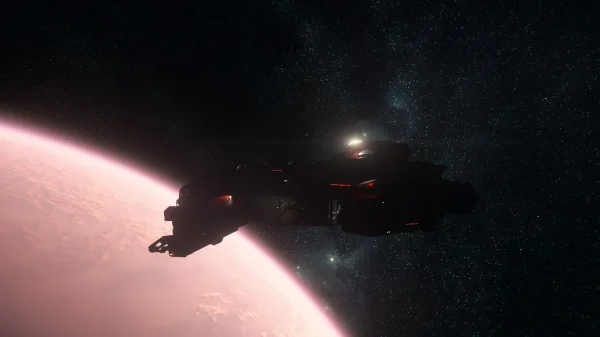
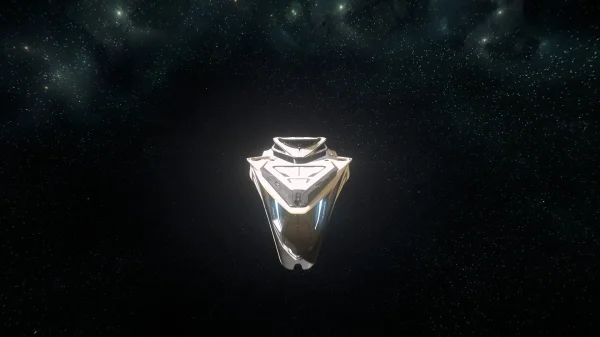
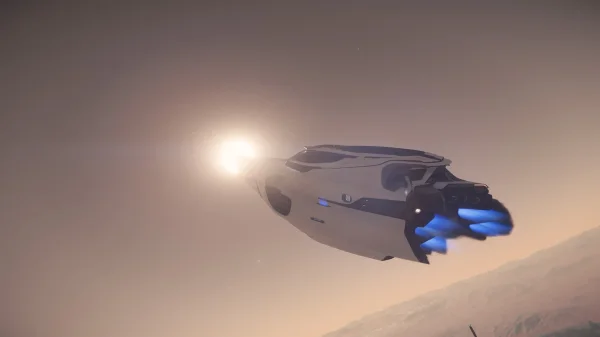
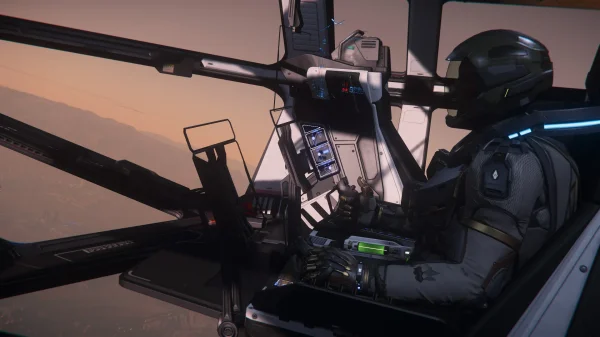
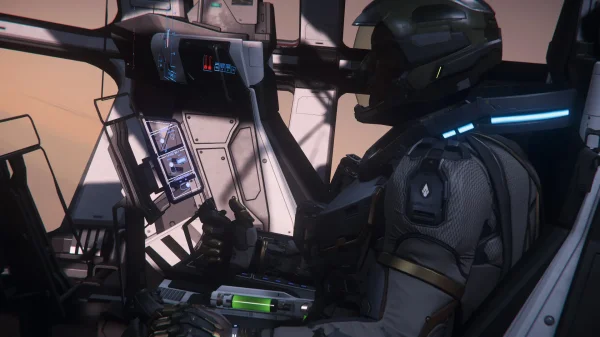
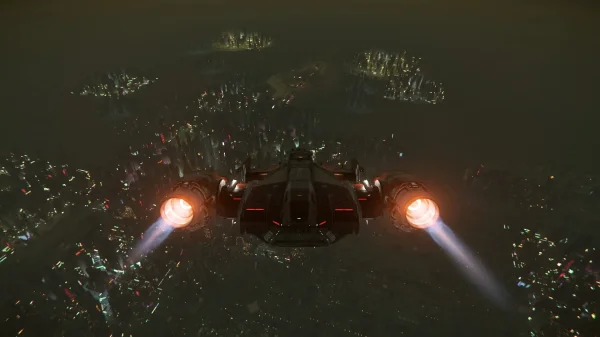
  1. SirMadsen posted a gallery image in Screenshots
  2. New Zealand View idea This is an example idea. I would like to see a New Zealand video. Idea submitter SirMadsen Submit date 05/31/2023 Category MSFS2020 Location Requests  
  3. All requests are made here! The forum is just for discussions and discoverability.
    • 6 downloads
    • Version 2.0.0
    Media Player Classic is a lightweight media player with support for a variety of audio and video formats. It is based on Media Player Classic - Home Cinema.
    Free
  4. Media Player Classic (Portable) View File Media Player Classic is a lightweight media player with support for a variety of audio and video formats. It is based on Media Player Classic - Home Cinema. Submitter SirMadsen Submitted 05/12/2023 Category Audio & Video  
  5. This is a conversation with ChatGPT about black holes. Question: What is a black hole ChatGPT Answer: A black hole is a region of space where the gravitational force is so strong that nothing, not even light, can escape from it. Black holes are formed when a massive star runs out of fuel and collapses in on itself, compressing all its mass into an incredibly small space. The boundary around a black hole, beyond which nothing can escape, is called the event horizon. Once an object crosses the event horizon, it is said to be "inside" the black hole and is unable to escape its gravitational pull. Black holes are not visible to the naked eye because they do not emit light. However, their presence can be inferred by the effect their gravity has on nearby matter, such as stars and gas. Scientists study these effects to learn more about the properties of black holes, including their size, mass, and spin. Question: How does it work? ChatGPT Answer: Black holes work by bending space and time around them due to their immense gravitational pull. The theory of general relativity, developed by Albert Einstein, predicts that the gravitational force of a massive object is strong enough to cause the fabric of space and time to warp and curve around it. As a result, objects that come too close to a black hole, such as stars or planets, are pulled towards it and eventually swallowed up. The closer an object gets to the black hole, the stronger the gravitational force it experiences and the faster it moves towards the black hole. Once an object crosses the event horizon, it is trapped by the black hole's gravity and cannot escape. The object will continue to fall towards the singularity, the point of infinite density at the center of the black hole, where it is crushed by the extreme gravitational forces. The exact nature of the singularity is still a topic of research and debate among scientists, as the laws of physics as we currently understand them break down at this point. However, the existence of black holes and their properties have been inferred through their effects on nearby matter, such as the orbits of stars around them, and by studying the radiation they emit. Question: Could it be a portal? ChatGPT Answer: There is currently no evidence to suggest that black holes could act as portals to other parts of the universe or to other dimensions. While the behavior of black holes may seem mysterious and exotic, they are still governed by the laws of physics as we understand them, and there is no scientific evidence to support the idea that they could act as portals. It is important to note that any object, including a spacecraft or even a person, that comes too close to a black hole would be stretched and crushed by the extreme gravitational forces before crossing the event horizon. Therefore, it is unlikely that anything could survive the journey through a black hole, even if it were possible for the black hole to act as a portal. It is important to approach the topic of black holes with scientific rigor and caution, as it is a field of study that requires a deep understanding of the laws of physics and the universe around us. Question: What is the biggest black hole known to man? ChatGPT Answer: The biggest black hole known to man is currently believed to be TON 618, located in the constellation Canes Venatici, approximately 10.4 billion light-years away from Earth. The estimated mass of TON 618 is around 66 billion times that of the sun, making it one of the most massive black holes known. It is an active galactic nucleus, which means that it is surrounded by a disk of hot gas and dust that emits intense radiation as it falls into the black hole. Other known supermassive black holes include S5 0014+81, which has an estimated mass of 40 billion suns, and SDSS J010013.02+280225.8, which has an estimated mass of 33 billion suns. It is worth noting that these estimates are based on observations of the effects of the black holes' gravitational pull on nearby matter, rather than direct measurements of the black holes themselves. Scientists continue to study these objects to learn more about their properties and the role they play in shaping the structure and evolution of galaxies. Question: Will our sun become a black hole? ChatGPT Answer: No, our Sun will not become a black hole. While the Sun is currently a main-sequence star, meaning it generates energy through nuclear fusion in its core, it is not massive enough to collapse into a black hole at the end of its life. Instead, as the Sun runs out of fuel in its core, it will evolve into a red giant, expanding and heating up as its outer layers expand outward. Eventually, the Sun will shed its outer layers and leave behind a hot, dense core known as a white dwarf. A star can only become a black hole if it is at least three times more massive than the Sun. When such a massive star runs out of fuel, its core collapses under its own weight, compressing all its mass into a singularity and forming a black hole. Therefore, the Sun will not become a black hole at the end of its life, but will instead evolve into a white dwarf and gradually cool down over billions of years.
  6. Want to ensure the quality of the company's games. After the low ratings for Redfall, "disappointment" is a recurring word when Phil Spencer joins us to talk about the game in Kinda Funny Games' video call. The Xbox boss says he understands buyers' disappointment and feels the same way. One of the issues touched on is that the game only runs at 30 frames per second on both Xbox consoles - that is, even on the more powerful Xbox Series X. 60 fps support will be patched in later, but Spencer doesn't insist that it should have been there there at release. Spencer says he doesn't want to poke at developers' creative ambitions. However, he sees it as his task to ensure quality and completion. In the roughly 40-minute long broadcast (watch in full above, or heavily shortened below), he also says that he takes full responsibility for the fact that $70 games have to be "great" when they're released. Which most people can agree that Redfall was not.
  7. This answer was provided by ChatGPT. Use this forum to create your own ChatGPT prompts and we will give what ever answer it outputs.
  8. Question: Explain how the sun works ChatGPT: The Sun is a massive, luminous ball of hot gas, primarily composed of hydrogen and helium, with traces of other elements. It is a type of star known as a main-sequence star, which means it is in a stable state of nuclear fusion, converting hydrogen into helium in its core. The process of nuclear fusion occurs when the extreme pressure and temperature in the Sun's core cause hydrogen atoms to combine, forming helium atoms and releasing vast amounts of energy in the form of light and heat. This energy radiates outwards from the core, through the Sun's layers, until it reaches the surface, where it is emitted as visible light. The Sun's energy output is maintained by a delicate balance between the inward force of gravity and the outward force of energy released by fusion. This balance ensures that the Sun remains stable and maintains a consistent size and brightness over millions of years. The Sun's activity also includes the emission of charged particles in the form of solar wind, which interacts with the Earth's magnetic field and can create beautiful displays of light known as the Aurora Borealis (Northern Lights). Overall, the Sun's fundamental workings are the result of the complex interactions between the fundamental forces of nature, and it remains one of the most fascinating objects in the known universe. Question: How big is it? ChatGPT: The Sun is an incredibly large object. Its diameter is about 1.39 million kilometers (864,938 miles), which is approximately 109 times that of the Earth. In terms of volume, the Sun is about 1.3 million times larger than the Earth, and it contains approximately 99.86% of the total mass of the entire solar system. To put it in perspective, you could fit about 1.3 million Earths inside the Sun. However, compared to other stars in the universe, the Sun is actually a relatively average-sized star. Question: Will it explode? ChatGPT: At the end of its life, the Sun will undergo a transformation known as a "red giant" phase. This is a period in which the Sun's core will run out of hydrogen fuel, causing it to contract and heat up, while the outer layers of the Sun will expand and cool down. During this phase, the Sun will grow to about 100 times its current size, and its outer layers will extend beyond the current orbit of the Earth. After the red giant phase, the Sun will eventually lose its outer layers and become a small, dense object known as a white dwarf. This process will occur over billions of years, and it is not expected to result in a violent explosion like a supernova. However, it's worth noting that the Sun is currently in the middle of its stable main-sequence phase, and it will continue to burn steadily for several billion more years before it begins to evolve into a red giant. So while the end of the Sun's life is a long way off, scientists are constantly studying the Sun to learn more about its behavior and evolution, and to better understand its potential impact on our planet.
Only guests see ads. Create a free account and/or log in for a complete ad-free experience.

Important Information

We have placed cookies on your device to help make this website better. You can adjust your cookie settings, otherwise we'll assume you're okay to continue. Read our Terms of Use and Privacy Policy for more information.

Configure browser push notifications

Chrome (Android)
  1. Tap the lock icon next to the address bar.
  2. Tap Permissions → Notifications.
  3. Adjust your preference.
Chrome (Desktop)
  1. Click the padlock icon in the address bar.
  2. Select Site settings.
  3. Find Notifications and adjust your preference.